






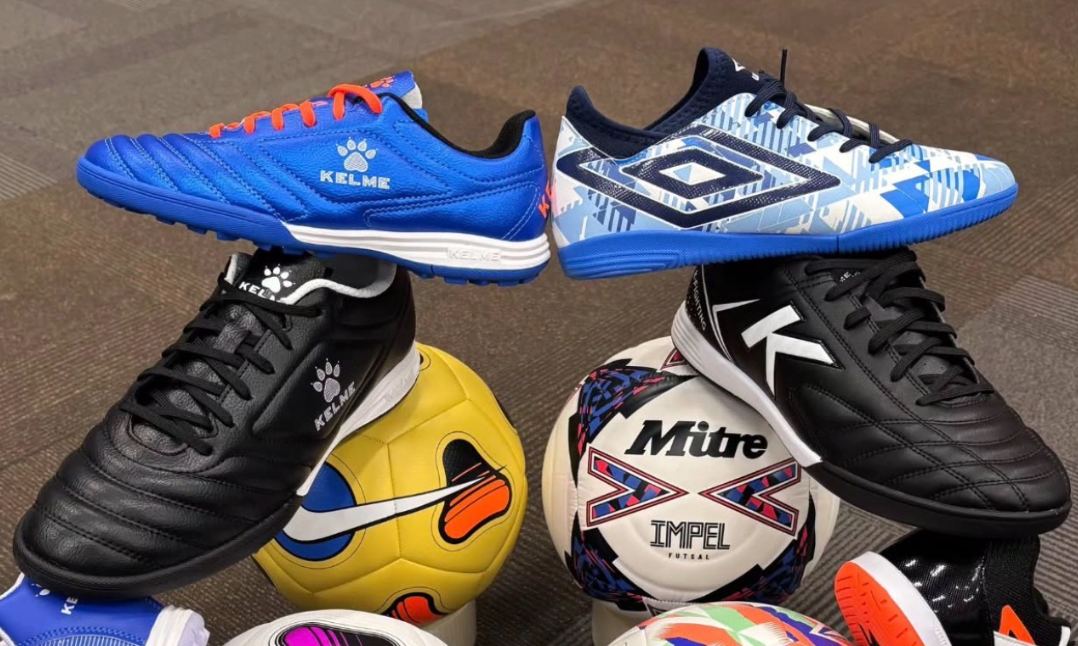

Football Boots Buying Guide
The best football boots depend on your playing surface first (FG, AG, SG, TF, IN), then your fit, position, and comfort needs. Choosing the wrong soleplate is the fastest way to lose traction and increase injury risk.
Quick Pick: Which Football Boots Should You Buy? (Surface-First Decision)

Soleplate type determines traction and stability on a given playing surface. When you choose the correct outsole first, everything else from fit and material to position specific needs become much easier.
- Play mostly on natural grass (dry to slightly soft) → FG
- Play on synthetic or artificial grass → AG
- Play on wet muddy natural grass → SG
- Play on hard ground or older turf → TF
- Play indoors or futsal → IN
Firm Ground (FG) Boots
Best for: Most outdoor grass matches
FG boots use moulded plastic studs in a bladed or conical pattern. They are designed to grip firm natural grass without digging in too deeply. This balance of traction and release is why FG is the default choice for most players and competitions.
Avoid: Regular use on artificial grass as FG studs can increase joint stress and wear down faster.
Artificial Grass (AG) Boots
Best for: Modern synthetic pitches
AG boots feature shorter, more numerous studs that spread pressure evenly across the foot. This reduces stud pressure, lowers the risk of knee and ankle strain, and improves comfort during frequent turns and accelerations.
Key benefit: Safer and more durable on AG compared to FG boots.
Soft Ground (SG) Boots
Best for: Wet, muddy natural grass
SG boots use screw-in metal studs to penetrate soft surfaces and prevent slipping. They offer maximum traction when conditions are heavy underfoot.
Avoid: Firm or dry pitches. Using SG on hard ground can be uncomfortable, damage the studs, and increase injury risk.
Turf (TF) Boots
Best for: Hard ground, older style turf
TF boots have a rubber multi stud sole that grips abrasive surfaces without digging in. They are durable, comfortable, and ideal for training sessions or casual games where pitches are compacted or worn.
Bonus: A great all round option for coaches or players who train often.
Indoor (IN) Boots
Best for: Indoor courts and futsal
IN boots use flat non marking rubber soles for maximum grip on smooth indoor surfaces. They provide close ball feel and quick responsiveness. For futsal or court play, indoor shoes are always a better choice than any outdoor boot.
FG vs AG vs SG vs TF vs IN (Side-by-Side Comparison)
Choosing the right football boot is less about brand and more about matching traction to the surface you play on. Each soleplate is built to solve a specific problem, grip on grass, safety on synthetic, bite in mud, or control on courts.
|
Soleplate |
Traction |
Comfort |
Injury Risk |
Durability |
Best Use Case |
|
FG (Firm Ground) |
Balanced grip with moulded studs |
Good on natural grass |
Higher risk on AG if overused |
Moderate |
Outdoor matches on dry to slightly soft natural grass |
|
AG (Artificial Grass) |
Controlled grip with shorter, denser studs |
High on synthetic pitches |
Lower on AG due to pressure distribution |
High on AG |
Regular play on modern artificial grass |
|
SG (Soft Ground) |
Maximum grip with metal screw in studs |
Low on firm ground |
Low |
Low outside wet grass |
Wet, muddy natural grass matches |
|
TF (Turf) |
Even grip from rubber multi studs |
High on hard ground |
Low |
Very high |
Training, older turf, compacted or abrasive surfaces |
|
IN (Indoor) |
Flat rubber grip for courts |
High with close ball feel |
Very low |
High indoors |
Indoor football and futsal courts |
Fit Comes Next: How Football Boots Should Feel

Once you have the correct soleplate, fit is the most important performance factor. Football boots should feel locked in and secure without causing pain.
Proper boot fit improves control and reduces blistering.
Measuring Your Foot (Length + Width)
You can measure accurately at home:
- Stand barefoot on a sheet of paper with your weight evenly distributed.
- Trace your foot or mark the longest toe and back of the heel.
- Measure length in centimetres and compare it to brand size charts.
- Measure width at the widest point of the forefoot.
Narrow vs Wide Boots (Choosing the Right Last)
Not all boots are shaped the same.
Narrow boots feel sleek and speed-forcused but can pinch wider feet, while wide boots provide more space across the forefoot for comfort and stability. If you experience numbness or pressure on the sides of your foot, try a wider boot.
Break-In Expectations (What’s Normal vs Not)
Normal during break in
- Slight stiffness in new material
- Mild tightness that erases after a few sessions
- Leather uppers softening and moulding to your foot
Not normal
- Painful pressure on toes or sides
- Hot spots that turn into blisters
- Heel slip that does not improve
- Numbness or tingling
If a boot hurts in the shop or first session, it will not become comfortable later.
Upper Materials Explained (Touch, Comfort, Durability)

Once the soleplate and fit are sorted, the upper material determines how the boot feels on the ball, how it adapts to your foot, and how it holds up over time.
Leather uppers mould to the foot over time, while synthetic uppers keep their shape longer.
Kangaroo Leather (K-Leather) and Premium Leather Options
Kangaroo and other premium leathers are ideal for players who prioritise touch, comfort and a personalised fit.
They are soft and flexible, moulding to your foot over time for a glove-like feel that enhances ball control. These boots offer exceptional cushioning and suit wider feet, but require regular care and drying. They work best for players who train and play regularly on natural grass and value feel.
Synthetic Uppers
Synthetic uppers are best for players seeking consistency, low maintenance and durability. Made from engineered materials, they maintain their shape and material over time, offering a lightweight boot that performs well in all conditions. However, these boots offer less natural padding and limited stretch for wider feet. Overall they are ideal for players on artificial grass, frequent trainers or anyone wanting a reliable boot.
Knit/Collar Designs and Laceless Boots
Knit collars and laceless boots are designed for comfort-focused players with stable shapes, providing sock-like comfort and a smooth strike zone while reducing pressure from laces. They use compression and internal structure for lockdown rather than laces offering a clean feel through the midfoot. However, they have less adjustability and can be challenging for players with high archers.
Stud Pattern and Traction (What Actually Changes On-Field)
Beyond soleplate type, stud layout directly affects how your boots behave when you accelerate, stop, and change direction.
Stud geometry influences rotational traction and change-of-direction control.
Conical Studs
Conical studs are ideal for agile players who make frequent direction changes. Their round or slightly tapered shape allows smooth release during pivots, making turn easier, reducing stress on knees and ankles. These studs are favoured by midfielders, attackers and players who rely on quick footwork.
Bladed/Moulded Studs
Bladed or moulded studs are designed for explosive acceleration and straight-line speed. Their shape digs in when pushing forward, providing excellent forward traction, strong acceleration and effective braking. They are ideal for players who rely on sprinting, but on hard or compacted surfaces they can feel aggressive and may increase joint stress during sharp turns.
Multi-Ground (MG) Soleplates
Multi-ground soleplates are suited for players who switch between surfaces and want a versatile option. Combining stud shapes and lengths, they offer balanced grip across natural and artificial grass, performing more forgivingly than firm ground on synthetic surfaces. They are convenient for casual or social players, however they provide less traction so are not as ideal for high-level competition.
Choosing Boots by Position and Playing Style
Position can guide your choice, but it should never box you in. Players move, cut, sprint, and strike differently even within the same role.
Boot choice should match movement patterns and comfort needs more than position labels.
For Wingers and Fullbacks (High-Speed Running)
For wingers and fullbacks who cover large distances at high speed, key priorities are speed, responsiveness and secure lockdown. Boots should have lightweight uppers to reduce fatigue, responsive stud layouts for quick takeoffs, and strong heel and midfoot lockdown to prevent slipping at top speed. Avoid bulky, padded uppers that reduce responsiveness and loose-fitting boots that compromise sprint stability.
For Midfielders (High Touch Volume)
For midfielders, key priorities are comfort, consistent touch and durability as they spend the most time on the ball and on the pitch. Look for cushioned or leather uppers for ball feel, even pressure distribution and durable materials that maintain their shape over long sessions. Avoid overly stiff boots that reduce touch feedback and aggressive stud layouts that feel tiring during a full match.
For Strikers (Striking and Sharp Cuts)
For strikers, key priorities are stability, confident traction, and a clean strike feel. Boots should provide a secure midfoot base, stud patterns that grip during explosive cuts, and a textured or smooth strike zone depending on preference. Avoid unstable lightweight boots with poor support and inconsistent traction that can undermine confidence in tight spaces.
For Defenders (Stability and Protection)
For defenders, key priorities are support, fit security, and durability. Boots should offer a supportive heel and midfoot, reinforced uppers for long-lasting wear, and a secure fit that stays in place during tackles and physical contests. Avoid ultra-thin uppers that wear quickly and loose-fitting boots that reduce confidence in challenges.
Budget vs Pro Boots (What You Get at Each Price Tier)
Price changes materials and build quality, not your skill level.
Higher priced boots usually add premium materials and weight savings, not automatic performance gains.
Entry-Level Boots (Value Picks)
Entry-level boots are ideal for beginners, juniors, and casual players, offering durability and affordability for training and regular use. They feature basic synthetic uppers, simple durable soleplates, and a heavier build. Prioritise a comfortable fit, correct soleplate for your surface, and secure heel lockdown, while ignoring marketing claims like speed control, strike tech, or ultra-lightweight features. When the fit is right, these boots perform well at grassroots level.
Mid-Tier Boots (Best Value for Most Players)
Mid-tier boots are ideal for regular players, club football, and frequent training, offering the best balance of comfort, durability and performance. They feature improved upper materials for better touch, refined stud layouts, and lighter weight without sacrificing structure. Comfortable for long matches and durable for weekly play, mid-tier boots deliver performance close to elite models while providing the best value for most players.
Elite Boots (Top Specs, Higher Risk If Fit Is Wrong)
Elite boots are aimed at senior competitive players who know exactly what they want, offering top-level performance with premium uppers, stiffer and more responsive soleplates, and maximum weight reduction. They provide lightweight responsiveness but are less forgiving if the fit is wrong, use thinner materials that may wear faster, and come at a higher cost without guaranteed comfort. Elite boots are worthwhile only if the fit is perfect; otherwise, they can feel uncomfortable and offer little advantage.
Common Mistakes When Buying Football Boots

Most boot problems do not come from bad products, they come from avoidable buying mistakes.
Using the wrong boots on the wrong surface increases slipping and foot stress.
Choosing the Wrong Soleplate for Your Surface
Choosing the wrong soleplate is a common mistake that can increase injury risk. Wearing firm ground (FG) boots on artificial grass raises joint stress and stud pressure, while soft ground (SG) boots on firm surfaces feel uncomfortable and unsafe. Always match your boots—FG, AG, SG, TF, or IN—to the surface you play on most.
Buying Boots Too Tight “Because They Will Stretch”
Buying boots too tight “because they will stretch” is a common mistake. Leather may mould slightly but won’t expand a full size, and synthetic boots stretch very little. Pain in the toes or forefoot on day one is a clear sign the boot is the wrong fit.
Ignoring Foot Width
Ignoring foot width is a major cause of discomfort. Narrow boots on wide feet can cause numbness and blisters, and sizing up does not solve the problem. Always choose a boot shape that matches your foot, not just the length number.
Using Soft Ground Boots on Firm Pitches
Soft ground (SG) boots are designed for muddy conditions, not dry grass. Metal studs on firm surfaces feel unstable, increase pressure on the foot, and raise the risk of slipping when studs cannot penetrate. Use SG boots only on genuinely soft, wet natural grass.
Treating FG as a “Do Everything” Option
Firm ground (FG) boots are versatile but not universal. They work well on natural grass but are not suited for regular artificial grass use. If you play across multiple surfaces, AG or MG boots provide safer and more comfortable performance.
Ignoring Early Warning Signs
Ignoring early warning signs can lead to bigger problems. Persistent heel slip, hot spots that become blisters, or joint soreness after every session usually indicate fit or soleplate issues—not a normal break-in phase.
Care, Break-In, and When to Replace Boots
Looking after your football boots is not just about appearance, it directly affects grip, comfort, and safety.
Proper boot care extends outsole life and maintains traction.
Breaking In New Boots Safely
New boots should be broken in gradually rather than worn straight into a full match. Start with short training sessions, light movements, quality football socks to reduce friction, and blister tape on known hot spots. Expect mild stiffness that softens over a few wears and leather uppers shaping to your foot. Watch for pain, numbness in the toes, persistent heel slip, or pressure that does not improve—these indicate a fit issue, not a break-in problem.
Cleaning and Drying (No Heat Damage)
Proper cleaning and drying are crucial for boot longevity. After each session, remove dirt and mud, rinse lightly with cold or lukewarm water, and wipe with a soft cloth. Air dry at room temperature, stuffing boots with newspaper or towels to absorb moisture, and never use heaters, radiators, or direct sunlight. Heat can warp soleplates, harden uppers, weaken glue, and shorten the life of your boots.
Replacement Timing
Boots should be replaced before they appear fully broken, as performance often declines first. Signs you need new boots include:
- Rounded or uneven studs
- Loss of traction when accelerating or stopping
- Soleplate separation from the upper, and heel slip in previously secure boots.
- Worn traction increases slipping and joint stress, while instability raises injury risk.
As a guideline, regular players may replace boots each season, while frequent training on abrasive surfaces may require earlier replacement.
FAQs About Buying Football Boots
Most players should prioritise surface compatibility before brand or styling.
FG vs AG?
Choose based on where you play most.
FG is for natural grass. AG is for artificial grass.
If you play regularly on synthetic pitches, AG is safer and more comfortable long term.
Should I size up?
No. Boots should feel snug without pain.
Sizing up to fix tightness usually causes heel slip and poor control.If it feels cramped, you need a different shape or width, not a bigger size.
What boots are best for wide feet?
Look for naturally wider fitting models or leather uppers that mould over time.
Avoid narrow speed focused synthetics. Width matters more than length for comfort.
Are laceless boots worth it?
They work well if your foot shape matches the boot and you like even pressure.
Avoid them if you have wide feet, high arches, or like to fine tune tightness. Laces offer more adjustability for most players.
Can I wear FG on turf?
Not recommended long term. FG studs wear quickly on turf and reduce comfort and grip. TF boots are safer, more durable, and perform better on hard or older turf surfaces.