










What Is Grains in Cricket Bat?
Grains in a cricket bat are the visible lines running vertically on the bat’s face, which reflect the age and growth pattern of the willow. Although grains can give some insight into how the tree developed, they are not the main measure of bat quality. Bats with fewer grains usually come from slower grown willow, which may take longer to reach peak performance but often provides greater longevity. Bats with a higher number of grains come from faster grown willow and tend to feel ready to play straight away, offering a lively response off the face, though they can sometimes have a shorter lifespan.
Quick Explanation: What Are Grains on a Cricket Bat?
Grains on a cricket bat are the vertical lines you see running down the face of the blade. These lines represent the natural growth rings of the willow tree used to make the bat. Grains can give a general idea of how quickly the tree grew and how the wood may respond when played with. Although they offer some insight into performance and feel, grains are only one small part of what makes a good bat. The pressing, balance and overall craftsmanship have a far greater impact on how the bat performs in real match conditions.

Why Do Grains Matter in a Cricket Bat?
Grains matter because they give players a quick visual guide to how the willow might perform. The number and spacing of the grains can influence the bat’s initial feel, the time it takes to reach full performance, and how long it may last. Bats with wider, fewer grains usually take a little longer to break in but can offer good long term durability. Bats with narrower, more frequent grains often feel ready to play sooner and can produce a lively ping straight away, although they may have a shorter lifespan.
Types of Grain Profiles – Tight vs Wide Grains
Grain profiles help players understand how a bat may feel and how long it might last. The two most common patterns are tight grains and wide grains, each offering a different balance of performance and durability. Tight grains usually provide quicker performance, while wide grains generally offer a longer lifespan.
Tight Grains (8–12+) – Fast, Soft, and Responsive
Tight grain bats have many closely spaced growth lines on the face, which usually come from faster grown willow. These bats feel soft and responsive from the first hit, producing strong ping with very little break in time. Many professional players prefer this type of grain pattern because it delivers immediate performance and a lively feel off the middle.
Wide Grains (4–6) – Durable and Long-Lasting
Wide grain bats show fewer growth lines that are spaced farther apart, which usually means the willow is older and has grown more slowly. This creates a slightly firmer feel at the start but often results in a tougher, more durable bat over many seasons. Wide grain bats are popular in club cricket because they tend to last longer and handle heavy use well.

How Many Grains Should a Good Cricket Bat Have?
A good cricket bat usually has around six to ten grains, which offers a balanced mix of performance, responsiveness and long term durability. This range provides a natural middle ground between the quick performance often seen in tight grain bats and the longer lifespan associated with wider grain profiles. It is important to remember that more grains do not automatically mean better quality. The pressing, balance and overall craftsmanship of the bat play a far greater role in how well it performs than the exact number of grains shown on the face.
Do More Grains Mean a Better Bat? (Myth vs Reality)
It is a common belief that a bat with more grains is automatically better, but this is not true. While grains give some insight into how the willow grew, they are only one small part of the overall picture. The real performance of a cricket bat comes from how well the wood has been pressed, how the bat has been shaped and how the weight is distributed through the blade. A bat with fewer grains can easily outperform a bat with many grains if the craftsmanship and preparation are superior.
The Role of Pressing and Preparation
Pressing has a major influence on how a bat performs. Proper pressing compresses the willow to the right level so it delivers strong ping while still maintaining durability. A well pressed bat will feel responsive and consistent regardless of how many grains it has. Knocking in and preparation also play a part in how the bat settles and performs in the long term.
Other Quality Indicators Beyond Grains
Several other factors give a much clearer indication of bat quality than grain count alone. These include how the weight is distributed through the blade, the size and placement of the sweet spot, the overall balance in the hands and the grade of the willow used. Together these elements determine how the bat feels, how it strikes the ball and how long it is likely to last.
How to Read Grains When Choosing a Bat (Buyer’s Guide)
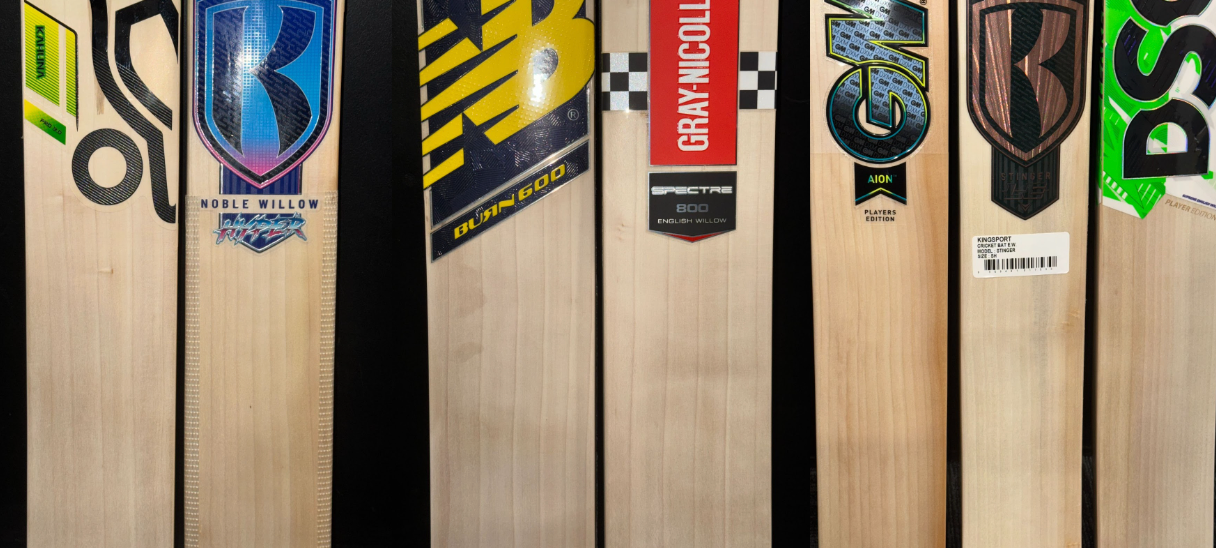
When choosing a cricket bat, grains can give you a basic idea of the willow’s growth pattern and how the bat may feel. Look for straight lines, even spacing and a clean face with minimal blemishes. Many major brands such as Gray-Nicolls, Kookaburra and MRF include both grain count and willow grade on their labels, but remember that these are guides rather than guarantees of performance.
Straight vs Wavy Grains
Straight grains usually indicate that the willow has grown evenly, which can help the bat respond more predictably. Wavy or irregular grains are still playable, but they may lead to slight variations in how the bat behaves across the face. Players who want a more consistent feel often prefer straighter grains.
Consistency and Clean Face
Consistent grain spacing and a clean, tidy face can give you more confidence in how the bat will perform. Evenly spaced grains suggest stable growth, while a clean face with fewer marks or knots often results in a smoother and more predictable hitting surface. While grains are only one part of the buying decision, reading them well can help you choose a bat that feels right in your hands and suits your style of play.

English Willow vs Kashmir Willow Grains
English willow and Kashmir willow differ naturally in how their grains appear, and this affects how the bats feel and perform. English willow typically shows clearer, straighter and more visible grains because it is a softer, lighter wood grown in cooler conditions. This softer structure allows the grains to stand out more distinctly and gives the bat a responsive feel once it is pressed and prepared.
Kashmir willow, on the other hand, is denser and harder because it grows in warmer climates. This results in grains that are often less visible, more closely packed and sometimes more uneven. While Kashmir willow bats can be durable and great for beginner or recreational cricket, the grain structure is not as consistent or as straight as English willow. This is why higher level bats are almost always made from English willow, which offers better performance potential and clearer grain definition.
Final Thoughts on Understanding Bat Grains Before Buying
Grains are a useful guide when choosing a cricket bat, but they are only one part of understanding its overall quality. They can give insight into how the willow grew and how the bat might feel or wear over time, yet they should not be the sole factor in your decision. A great bat comes from a balance of several features including how it is pressed, its pickup, its balance, its sweet spot and the craftsmanship behind it. Trusted brands with consistent manufacturing standards also play an important role. When buying a bat, use grain count as a helpful reference, but always judge the bat as a whole to find the one that suits your game best.
FAQs About Cricket Bat Grains
What is the best number of grains in a bat?
A good bat usually has six to ten grains, which offers a balanced mix of performance and durability. This range is a general guide rather than a strict rule.
Do more grains mean a better ping?
Not always. More grains can feel ready to play sooner, but ping depends far more on pressing, willow quality and overall craftsmanship. A bat with fewer grains can ping just as well if it is well-made.
Is grain count more important than bat grade?
No. Cricket bat grade and overall craftsmanship matter more than the exact number of grains. Grade reflects the quality and cleanliness of the willow, while grains simply show how the tree grew.
How do grains relate to bat lifespan?
Bats with fewer, wider grains usually take longer to reach peak performance but often last longer. Bats with many tight grains tend to feel ready immediately but may have a shorter lifespan. Still, pressing and preparation play a bigger role in durability than grain count alone.